Everything You Need to Know When Recovering from a Hamstring Injury
A practical, research grounded guide to identifying a hamstring injury, navigating rehabilitation, returning to running, and deciding when the hamstring is ready.

What the research says
A new ICCUS Society consensus on athletic hamstring injuries asked 17 experienced sports clinicians to agree on the decisions that matter from injury through return to sport. The practical takeaway is that recovery should be guided by function, not by a fixed number of weeks.
The paper supports an active, progressive rehabilitation plan: identify the injury, restore movement and strength, build from running to sprinting, and test the exact demands of the activity. No single exercise, scan, or timeline determines readiness on its own.
Figure out what the hamstring injury is
Hamstring injuries are not all the same. A mild muscle strain in the middle of the thigh is different from an injury closer to the tendon near the pelvis or knee. Location, severity, previous injuries, and the activity someone plans to resume all affect the recovery plan.
A clinician can use the story of how the injury happened, a physical examination, and sometimes imaging to classify it. The 2022 clinical practice guideline notes that imaging is most useful when the diagnosis is uncertain, a more serious injury is suspected, or recovery is not progressing as expected.
Prompt medical care is appropriate after a pop, an inability to walk normally, major swelling or bruising, severe pain high near the sitting bone, or symptoms that are not improving. The NHS hamstring guidance gives similar reasons to get evaluated.
What to do in the first few days
Protect the area from movements that sharply reproduce the injury, but do not assume complete rest is the entire treatment. Ice, compression, and elevation may help with comfort and swelling, but they do not replace rehabilitation. Aggressive stretching and repeated testing of the painful movement can irritate the area.
Once a serious injury has been ruled out, comfortable movement and light muscle activation can usually begin. The correct starting point depends on the examination. Early activity should not create sharp pain, a limp, or a worse reaction later that day or the next morning.
What to watch for during hamstring rehabilitation
- Movement and control should return first. Early work may include gentle range of motion, easy isometric contractions, and exercises for the trunk and pelvis.
- Strength should build gradually. Rehabilitation usually progresses from lighter contractions to harder concentric and eccentric work, including strength at longer muscle lengths when appropriate.
- The response afterward matters. Increasing pain, a new limp, loss of motion, or a reaction that remains worse the next morning suggests that the load was too high.
- The final phase should match the activity. Cutting, kicking, jumping, and repeated acceleration place different demands on the hamstring. Rehabilitation should eventually include those demands.
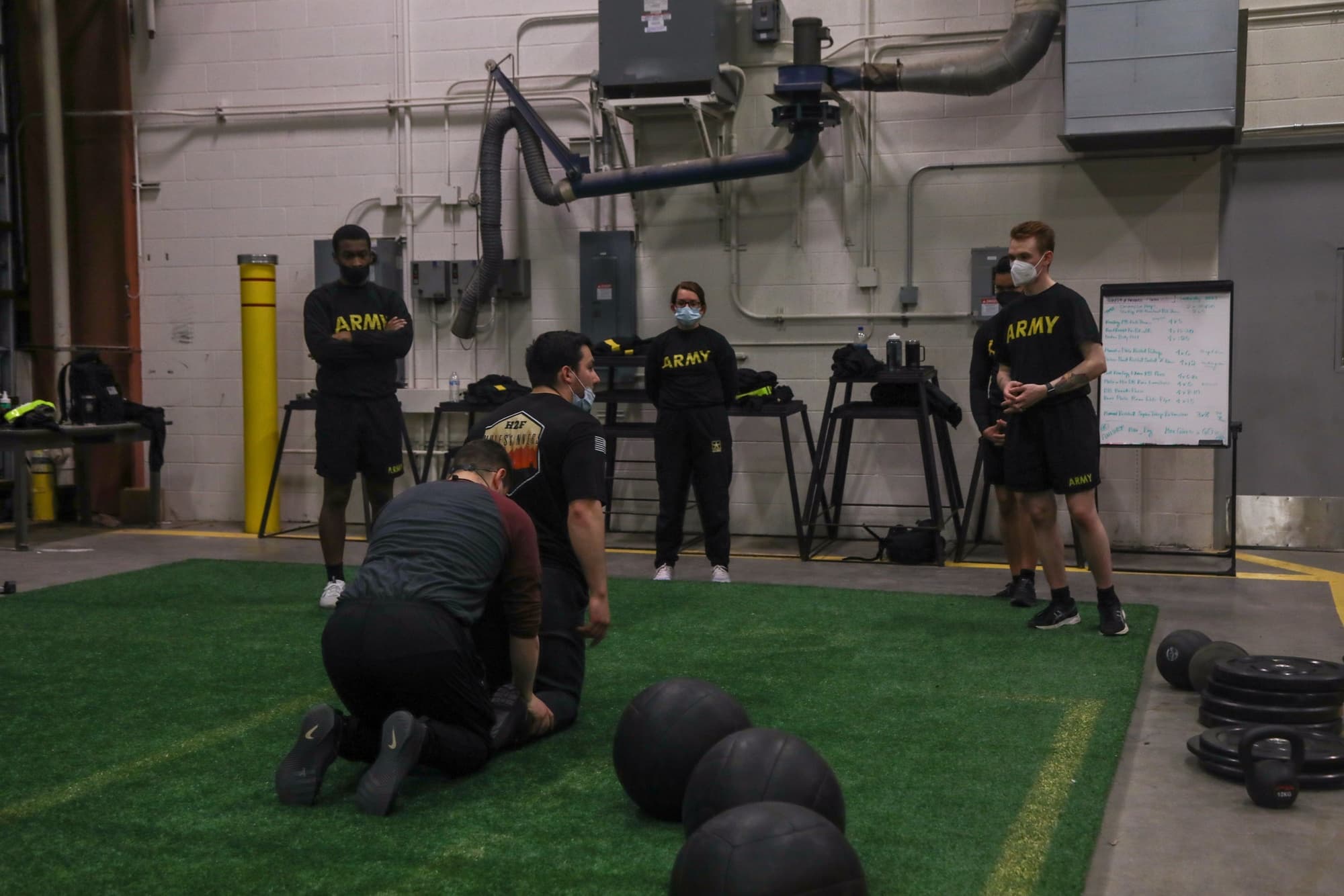
Nordic hamstring curls can be useful, but they are not the whole program and are not appropriate at every stage. The right exercise loads the injured tissue at a difficulty it can tolerate and adapt to.
How much pain to expect
Some discomfort may be acceptable during rehabilitation when a clinician has set an appropriate limit and the response settles as expected. Sharp pain, increasing pain, a new limp, or symptoms that remain worse the next day usually mean the load was too high.
Both the feeling during an exercise and the reaction afterward matter. A session that repeatedly creates a larger setback is irritating the injury rather than building capacity.
When can you start running?
Running usually begins after brisk walking is comfortable, the hip and knee move well, basic strength work can be completed with good control, and activity does not cause a significant flare afterward. A clinician may adjust those criteria based on the injury.
The first running dose should be easy and controlled. If symptoms remain settled during the session and the following day, duration and speed can increase gradually. Faster running and sprinting are separate steps. An easy jog does not prove readiness for full speed practice.
When to return to sport
Being pain free in daily life is not the same as being ready for sport. Before unrestricted return, the new consensus recommends combining several kinds of evidence:
- Strength: objective testing shows enough capacity for the activity.
- Speed: running and sprinting are pain free at the required intensity.
- Workload: full training, including repeated efforts, does not cause a bad reaction afterward.
- Sport movement: cutting, kicking, jumping, or changing direction can be completed as required.
- Confidence: the athlete trusts the leg and does not protect it when movement becomes fast or unpredictable.
No single test guarantees that reinjury will not happen. A sound return decision combines objective testing, full training exposure, athlete confidence, and clinician judgment.
Three questions to ask your doctor
- What exactly was injured, and how does that change the rehabilitation plan?
- What criteria need to be met before running, sprinting, and returning fully?
- How will strength and workload be measured instead of relying only on time?
Need help recovering?
GoodMetal has a library of hamstring rehabilitation programs for different stages of recovery, from early mobility and strength work through the return to running and sport.
GoodMetal also connects members with sports medicine doctors and physical therapists who can help identify the root cause of an injury and build a custom recovery plan.

Sources
[1] Diagnosis, Rehabilitation and Return to Sport After Athletic Hamstring Injury: An ICCUS Society Consensus Statement; [2] ICCUS Society for Sports Rehabilitation; [3] Hamstring Strain Injury in Athletes: Clinical Practice Guidelines; [4] NHS Hamstring Injury Guidance; [5] Nordic Hamstring Rehabilitation Photo, Defense Visual Information Distribution Service.
This guide is general information. Your clinician can assess your symptoms and recommend care for your situation.